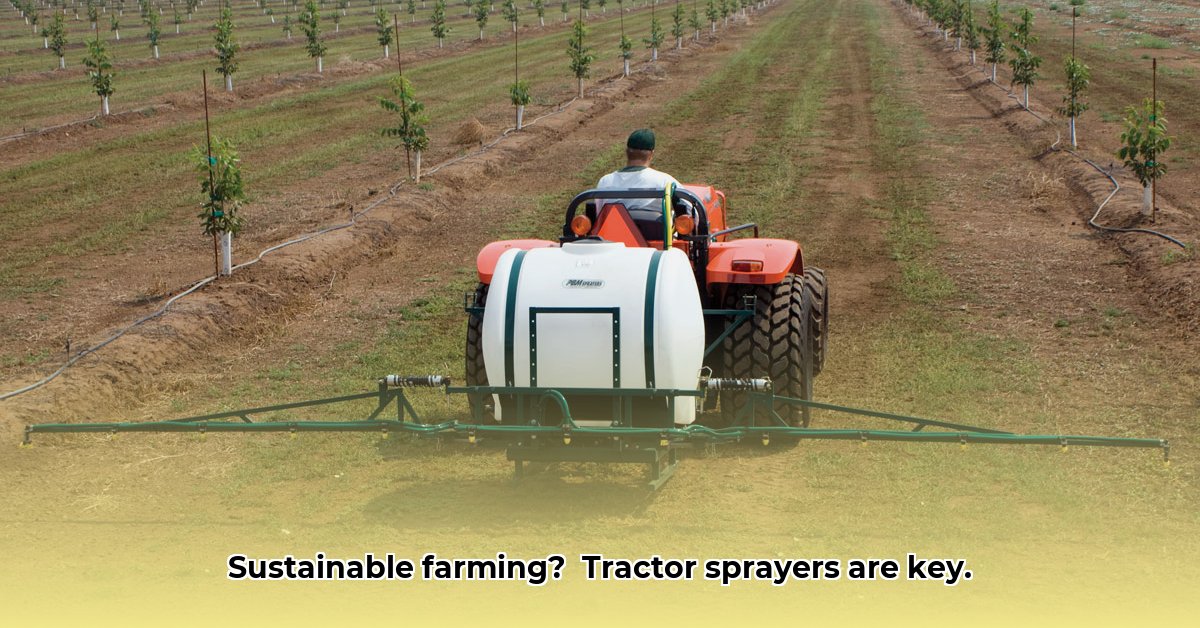
Sprayer for a Tractor: Your Guide to Sustainable Farming
Tractor sprayers are transforming how farmers protect crops and boost yields. Their precision and efficiency benefit farms of all sizes, contributing significantly to sustainable agricultural practices. This guide covers selecting the right sprayer and mastering precision spraying techniques for optimal results. For more sprayer options, check out this helpful resource: 3-point sprayers.
Picking the Right Sprayer: A Personalized Approach
Choosing the ideal tractor sprayer depends on your unique farming operation. Consider these factors:
- Farm Size and Crop Diversity: Smaller, diverse farms may need maneuverable sprayers for varied terrain, unlike large monoculture operations needing high-capacity machines.
- Terrain: Uneven land necessitates maneuverable sprayers capable of handling slopes without compromising application accuracy. Flat fields allow for larger, faster machines.
- Spray Volume: Determine your average spray volume per acre to select appropriate tank size and pump power. Larger tanks reduce refills but increase machine weight.
- Spray Patterns and Droplet Size: Different nozzles create varying patterns and droplet sizes. Select nozzles providing optimal coverage for your crops while minimizing drift (the unintended movement of spray particles). This is crucial for environmental protection.
- Budget: Sprayers vary significantly in price. Consider your budget and explore financing options. A well-maintained, less expensive model can be highly effective, particularly for smaller operations.
Mastering the Art of Precision Spraying: A Step-by-Step Guide
Effective sprayer use involves precision application. Follow these steps:
Calibration: Accurate calibration is paramount. It ensures correct chemical application, preventing waste and environmental damage. Over-spraying is wasteful and potentially harmful, while under-spraying compromises crop health. Consult your sprayer's manual and available online resources.
Nozzle Selection: Choose nozzles producing the optimal droplet size for your crop and pest. Smaller droplets offer better coverage but increase drift risk. Larger droplets minimize drift but may reduce coverage. Experimentation and research are vital.
Consistent Speed: Maintaining a constant ground speed is crucial for even application. Utilize your tractor's speedometer and, ideally, a GPS guidance system to maintain consistent speed. Inconsistent speed leads to uneven application and reduced effectiveness.
Boom Height Adjustment: Adjust the boom height to the manufacturer's recommendations. This ensures thorough coverage without plant damage and minimizes drift. Improper height compromises application efficacy.
Overlap: Slight overlap between spray passes ensures complete coverage, preventing gaps and optimizing product effectiveness. Visual cues and GPS technology improve precision.
Maintenance: Regular maintenance is essential for reliable operation, extended lifespan, and fewer repairs. This saves money and minimizes downtime. Consult your owner's manual for recommended maintenance schedules.
Why Precision Spraying is a Game Changer
Precision spraying offers numerous advantages beyond convenience:
Reduced Chemical Use: Targeted application minimizes chemical waste, lowering costs and environmental impact. Did you know that precision spraying can reduce chemical use by up to 90% compared to traditional methods? This significant reduction translates directly into cost savings and reduced environmental impact.
Healthier Crops & Higher Yields: Consistent application leads to healthier plants and improved yields. "Precision spraying ensures uniform coverage, leading to healthier plants and increased yields," says Dr. Emily Carter, Agricultural Engineer at Purdue University.
Water Conservation: Precision spraying often utilizes less water than broadcast methods, conserving this precious resource. This contributes to efficient water management.
Increased Efficiency: It saves time and labor, freeing resources for other farming tasks. This efficiency translates into more time for other critical activities.
Reduced Drift: Targeted application minimizes the risk of chemicals drifting onto non-target areas. This protects both the environment and neighboring properties.
Sustainable Farming and You: A Powerful Partnership
Precision spraying is a crucial element of sustainable agriculture. Reduced chemical use, optimized application, and water conservation create a healthier environment and more responsible food production.
Challenges and Considerations: Navigating the Real World
Despite the benefits, challenges exist:
High Upfront Costs: Advanced sprayers can be expensive. However, long-term savings from reduced chemical use and improved efficiency can outweigh this initial investment. Explore financing options such as leasing or government grants.
Technical Expertise: Operating and maintaining these machines requires training and knowledge. Invest in thorough training to maximize the sprayer's potential. Numerous resources exist, both online and through agricultural extension services.
Data Management: Effectively utilizing precision spraying involves interpreting data from the sprayer's systems. This requires a learning curve but improves future applications.
Environmental Risks: Even with precision spraying, risks of drift or soil contamination remain. Strict adherence to safety precautions and best practices is crucial.
The future of sustainable farming will integrate technological advancements like precision sprayers. While initial investments and technical expertise are required, the environmental and economic benefits are significant, making this technology increasingly essential for environmentally-conscious farming practices. Embrace continuous learning and adaptation to maximize success.
How to Mitigate Economic Risks of Precision Spraying Technology Adoption in Sustainable Agriculture
Adopting precision spraying involves financial considerations. However, strategic planning and risk mitigation strategies can maximize economic benefits.
Step-by-Step: Minimizing Investment Risks
Pilot Program: Start with a small-scale trial to assess performance before full-scale adoption.
Explore Funding: Research government subsidies and grants to offset initial costs.
Optimize Application: Invest in high-quality sensors and software for accurate application. Regular calibration and maintenance are crucial.
Leverage Cost Savings: Reduced chemical use leads to significant cost savings.
Integrate Data: Use precision spraying data within your broader farm management system to improve decision-making and efficiency.
Invest in Training: Proper training ensures efficient operation and maximizes return on investment.
Monitor and Adapt: Continuously track results, monitor yield and cost impacts, and adapt your strategy.
Risk Assessment and Mitigation
| Risk Factor | Potential Impact | Mitigation Strategy |
|---|---|---|
| High Initial Investment | Delayed ROI, financial strain | Phased implementation, explore financing options, subsidies. |
| Technology Malfunction | Crop damage, wasted inputs | Regular maintenance, backup systems, reliable vendor support. |
| Inaccurate Data/Sensor Errors | Ineffective treatment, wasted resources | Regular calibration, data validation techniques. |
| Lack of Proper Training | Inefficient operation, increased costs | Invest in professional training for farm staff. |
| Unexpected Environmental Issues | Potential negative ecological effects | Continuous monitoring, adaptive management practices. |
(Note: Case studies and examples would be included here in a published article.)